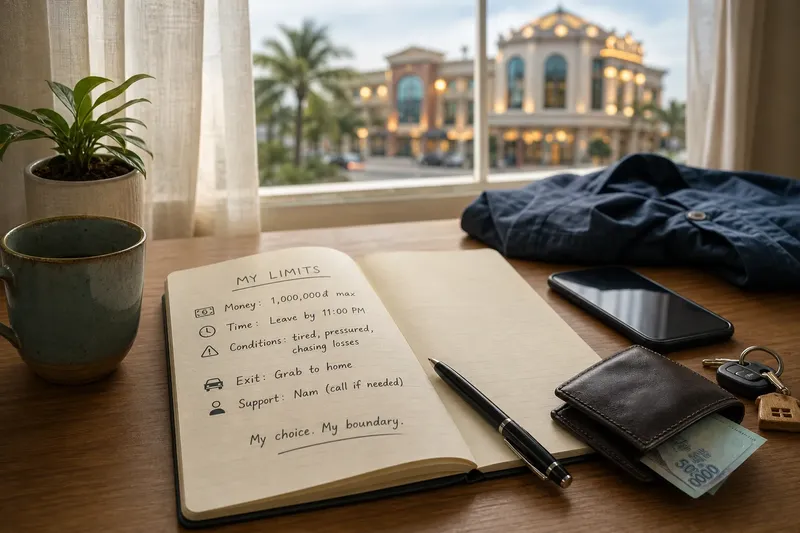
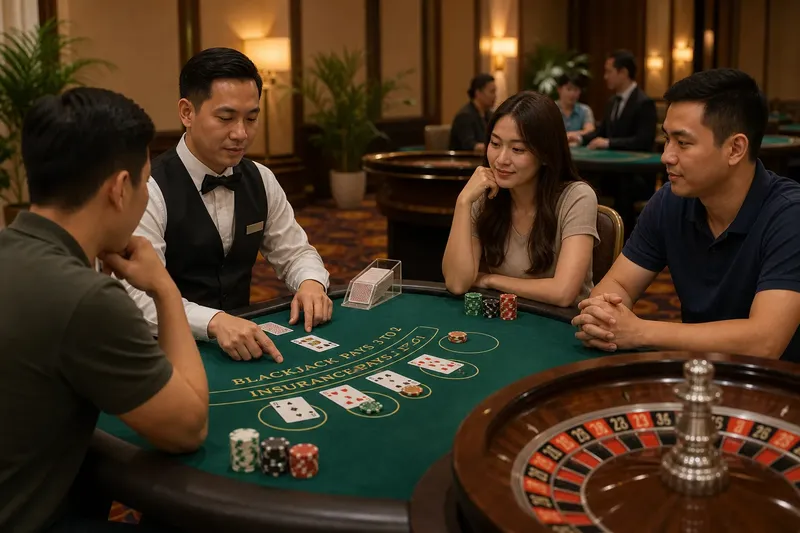
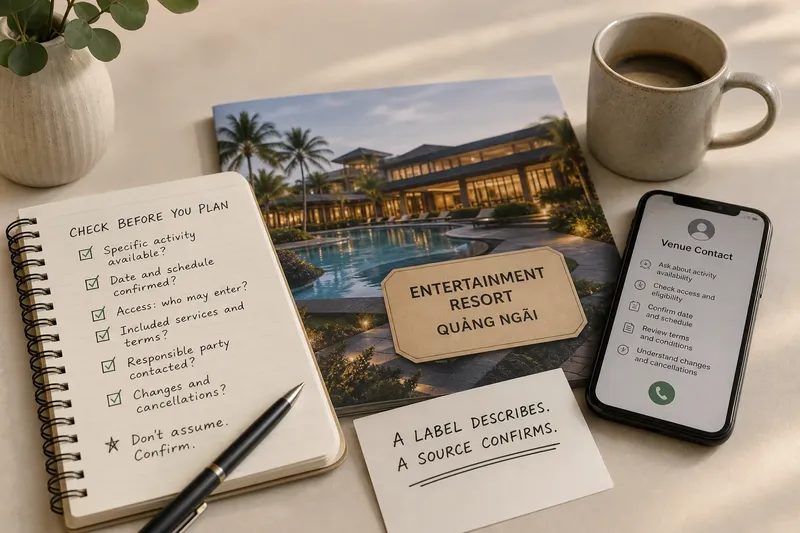
Why “Casino” Can Describe a Mood, Not a Place
Casino language can suggest spectacle without naming a gambling venue. Learn to read the surrounding details and describe an event more precisely.
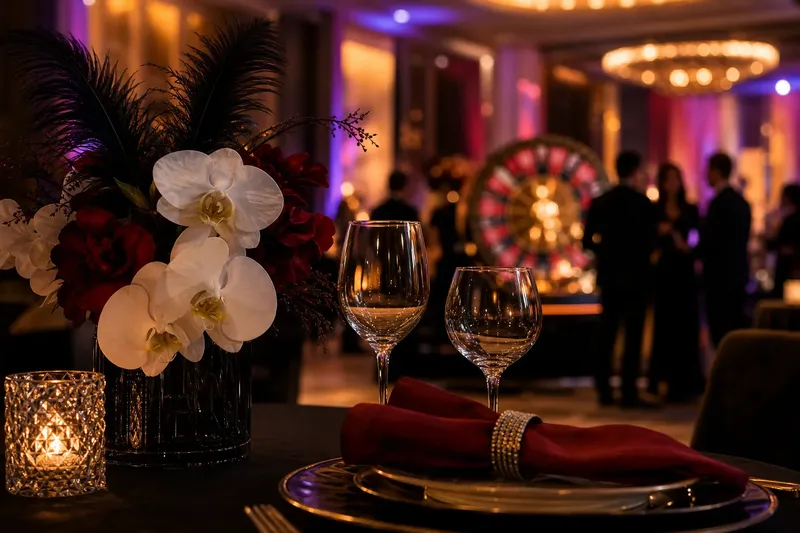
The common mistake is to hear casino and assume it names a gambling venue. In Quảng Ngãi, the word may also appear as borrowed shorthand for bright lights, formal dress, or a lively room. That shortcut can blur a useful distinction: a visual mood is not the same thing as a place or activity.
What does “casino” describe in a conversation?
In its direct sense, casino refers to a venue associated with gambling. In casual speech and event promotion, people may borrow the word to evoke spectacle instead. A poster might advertise a “casino-style evening” to suggest décor or dress, without making clear what guests will do.
The phrase alone cannot settle the question. Look at the words around it: does the description name a venue and activities, or does it use “casino” to modify a theme, room, or night out? Read the noun beside the label.
Why does casino language evoke a particular mood?
Some place names gather associations that speakers can use without referring to the place itself. “Theater” can describe a dramatic gesture; “carnival” can suggest vivid colors and bustle. Casino language works similarly, but it carries an extra ambiguity: it can evoke both entertainment and gambling.
That ambiguity makes the phrase culturally interesting. A speaker may intend theatrical lighting and a festive atmosphere, while a listener imagines gambling. Neither interpretation needs to be dishonest for the words to leave room for confusion. Asking which feature the speaker means keeps the conversation focused on the image being borrowed.
Name the feature—lighting, dress, or décor—instead of relying on the label.
How can you describe the difference clearly?
Choose wording that identifies what is actually being described. “The room has casino-style lighting” points to a design choice. “It is a casino” describes the place in a much more definite way. When sharing an event notice, distinguish the promoter’s wording from the details it confirms.
Imagine you receive a message about a “casino night” at a hotel in Quảng Ngãi. The invitation names a dining room and a formal dress theme but lists no games. You ask the organizer whether “casino” refers to the décor or the planned activities. If the organizer says it means bright lights and dress, you can tell a friend it is a themed dinner, while noting that the invitation used the phrase “casino night.” That description preserves both the event’s stated details and the source of the label.
What details resolve the ambiguity?
- Setting: If “casino” names a venue and an address, describe it as a named place; if it appears as a theme, call it a themed event instead.
- Activity: If the invitation lists what guests will do, describe those activities; if it does not, ask the organizer rather than infer them from the title.
- Speaker: If the wording comes from an organizer, attribute it to the event notice; if it comes from informal conversation, present it as that speaker’s comparison.
- Context: If the surrounding text identifies dining, entertainment, or gambling, use that specific description; if it only evokes atmosphere, name the mood or visual feature instead.
- Image: If a photo shows décor, describe only what is visible; if the activity matters, seek a plain description from the organizer instead of treating the image as proof.
- Rules: If the event’s terms or local rules affect what guests may do, check the relevant terms or ask an appropriate local professional; if they are not relevant to your description, avoid making claims about them.
These checks are about clarity, not judging anyone’s intent. A vivid slogan can be playful and still leave readers guessing. Plain details let an audience understand the event without turning a metaphor into a claim.
Which questions help distinguish a theme from a venue?
Does “casino” always mean a gambling venue?
No. It can also be used as a metaphor or an event theme. The surrounding description—not the word on its own—helps show what the speaker means.
What does “casino-style” usually describe?
It may refer to a visual or entertainment theme, but the phrase does not specify which one. Ask whether it means décor, dress, or planned activities.
How can you repeat a label without endorsing it?
Attribute the wording: say that a poster or speaker used the phrase, then state what details are actually given. If those details are missing, keep the uncertainty visible rather than filling the gap with an assumption.
Why can a metaphor still cause confusion?
A listener may take a borrowed image literally, especially when the word also names a kind of venue. Naming the specific feature being compared makes the intended meaning easier to follow.
Why does this distinction matter in Quảng Ngãi?
In local conversation, a striking label can travel farther than its original setting. Someone who hears that an event is “like a casino” may picture gambling facilities, while the speaker may mean only elaborate lighting or a busy room. Saying what the comparison refers to keeps the image from becoming an unintended description of the event.
When you encounter casino language in Quảng Ngãi, notice whether it names a place or borrows an atmosphere. The most useful next move is often simple: ask what guests will actually see or do, then describe that detail in your own words.