A Limit Works Best Before the Invitation
A limit set before a casino invitation helps you recognize a changed plan, explain your boundary clearly, and leave without making a rushed decision.
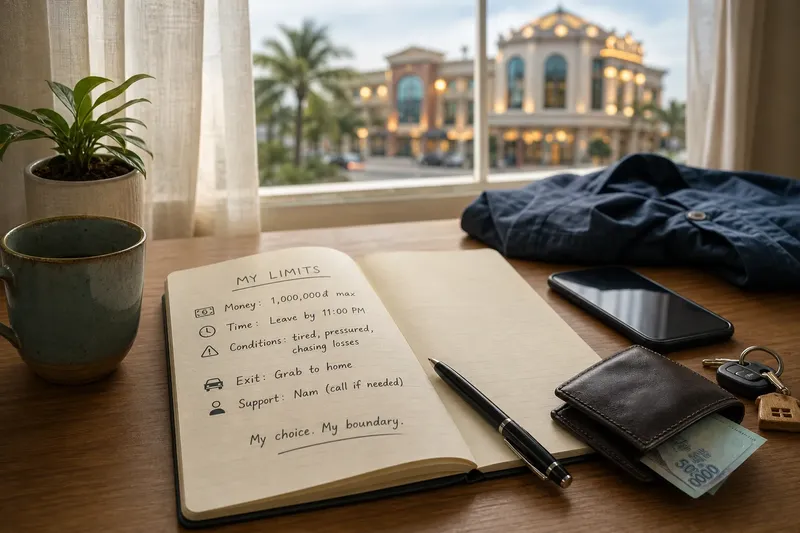
The common mistake is agreeing to a casino outing first and deciding how far to go after arriving. A limit set before the invitation gives you a reference point when conversation, atmosphere, or a friend’s suggestion begins to reshape the plan.
Why decide on a limit before accepting an invitation?
A casino invitation can feel like a simple social plan: meet friends, have a meal, look around, perhaps play a game. But once you are there, the details may shift. Someone may suggest staying longer, trying another game, or putting in more money than you had in mind. A decision made in advance is easier to recognize than one made under social pressure.
That limit does not have to be a complicated rule. It might be a decision not to gamble at all, a fixed amount you can comfortably lose, or a choice to leave at a certain point. Its purpose is not to predict how the evening will feel. It is to give you a clear boundary when the evening feels different from what you expected.
In Quảng Ngãi, as elsewhere, an invitation may involve people you know well or a gathering where you would rather not draw attention to yourself. Thinking through your boundary privately lets you decide what you are comfortable with before you need to explain it.
Make the decision while you are still at home, not while someone is waiting for your answer at the table.
What should a personal stopping point include?
A useful stopping point is specific enough to act on. “I’ll see how it goes” leaves the decision open to whatever happens next. A clear limit answers what you will do if a boundary is reached.
- Money: Decide whether you will gamble, and if so, what amount you can afford to lose without borrowing or affecting essential expenses.
- Time: Choose when you intend to stop playing or leave, taking transport and other plans into account.
- Conditions: Decide what changes the plan, such as feeling pressured, becoming tired, or wanting to chase a loss.
- Exit: Consider how you will get home if you leave before the group does.
- Support: Identify someone you can tell in advance, especially if keeping the boundary may be difficult.
These choices do not need to be announced to everyone. You can keep them private, share them with one trusted person, or state a simple boundary if the conversation calls for it.
Choose a limit you can follow without needing another person’s permission.
How can you tell when the plan has changed?
The plan has changed when the activity, spending, timing, or pressure no longer matches what you agreed to yourself. A group’s suggestion does not automatically change your boundary. It does give you a moment to notice the difference and decide whether you still want to participate.
Watch for practical signs: the group is staying beyond the time you set; someone proposes using money you had reserved for something else; you are considering borrowing; or you feel you must keep playing to recover what you lost. These are reasons to pause, rather than instructions to push through.
Say you have agreed to join friends for dinner and decided beforehand not to gamble. At the venue, a friend offers to show you a game and says you can try with a small amount. You can recognize that playing is a new part of the plan, decline, and continue with dinner—or leave if the social pressure makes staying uncomfortable.
When the plan changes, take a pause before you answer.
What can you say when friends suggest continuing?
A short, steady response usually works better than an explanation that invites negotiation. You do not need to persuade the group that your decision is correct. State what you have decided, then move to a practical next action.
- “I’m done playing for tonight. I’ll meet you outside.”
- “I’m sticking to the amount I set before we came.”
- “I’m not adding another game, but I’m happy to stay for dinner.”
- “I’m heading home now. I’ve arranged my ride.”
If someone presses you, repeat the boundary without adding new reasons: “No, I’m leaving now.” You can also contact a trusted person or move to a quieter public area while arranging a safe way home. If you are worried about someone else’s reaction, prioritize your immediate safety and seek help from a person or service you trust.
Prepare one sentence in advance, so you are not composing it under pressure.
How can you make the limit easier to keep?
Pair the boundary with a practical arrangement. If your limit is about spending, avoid bringing extra cash or using payment options you did not intend to use. If it is about time, make a separate plan for getting home rather than relying on the group to finish together. These arrangements make your own decision easier to follow, but they do not remove the need to choose.
It can help to tell one friend your plan before setting out. Ask them to respect it, not to monitor or shame you. If you would rather not discuss gambling, you can simply say that you have an early start or need to leave at a particular time, provided that explanation feels comfortable and safe.
Do not treat a limit as a reason to test yourself. If you already feel unable to stop, or gambling is affecting money, relationships, work, or your sense of control, consider talking with a qualified health professional or a local support service. A trusted person can help you think through the next step.
What should you ask yourself before accepting an invitation?
Do I want to attend if gambling is part of the plan?
Decide whether the social company is enough for you, or whether the venue itself would make the evening uncomfortable. You can decline, suggest a different place, or agree only to the part of the outing that suits you.
What will I do if the group stays longer?
Choose whether you will leave at your planned time or stay without playing. Arrange a way home that does not depend on everyone else being ready to go.
What is my boundary if I lose the amount I set?
Decide in advance that reaching your limit means stopping, not adding money to recover a loss. If that feels hard to do, choosing not to gamble may be the clearer boundary for this invitation.
Who can I contact if I feel pressured?
Pick someone you can message or call without needing to explain everything at once. If nobody in the group feels like a safe person to ask, consider whether attending is right for you.
Does setting a limit mean you have to attend?
No. A limit can help you make a clearer choice, including the choice to decline. If the invitation already feels stressful, if you expect others to disregard your boundary, or if you do not want to be around gambling, you can say no without offering a detailed reason.
Alternatives can preserve the social connection without the same setting: suggest a meal elsewhere, meet for a walk, or plan a visit at a different time. You are not responsible for keeping a group together by joining an activity that conflicts with your decision.
A limit set before an invitation is most useful when it remains yours to revise only with care, not because someone else expects you to. Decide what you can accept, name the point at which you will stop, and leave room to decline the whole plan. In an evening shaped by other people’s choices, that private decision can keep yours clear.